

Safe City / COMPLETED PROJECT
Coordinated security across 242 schools.
Deployed security analytics across 2,000+ live video streams, covering school entrances, public areas and perimeters. Threat detection triggers site-specific alerts and configured access-control actions through connected IP door locks.
shorter incident response time
Compared with manual incident detection and response across the monitored schools.
fewer false alarms
AI event filtering reduced the false alerts operators needed to review.
lower monitoring costs
Compared with routine manual monitoring across the deployed school network.
- Before
- Manual video review and incident coordination across schools
- After
- Threat detection triggers site-specific alerts and configured access-control actions through connected IP door locks.
The solution
Threat detection
Configured kidnapping, fire and smoke, perimeter and weapon detection for monitored school areas.
Site-specific monitoring
Applied rules to entrances, public spaces and perimeters across 242 schools.
Incident evidence
Linked each relevant alert to its camera view and location for operator review.
Response coordination
Threat detection triggers site-specific alerts and configured access-control actions through connected IP door locks.
Distributed sites, fragmented response
School security teams need to recognize a threat, locate it and coordinate a response across multiple sites. Continuous manual review of individual feeds leaves operators with too much video and too little incident context.
The deployment brought school entrances, public areas and perimeters into a shared monitoring workflow.
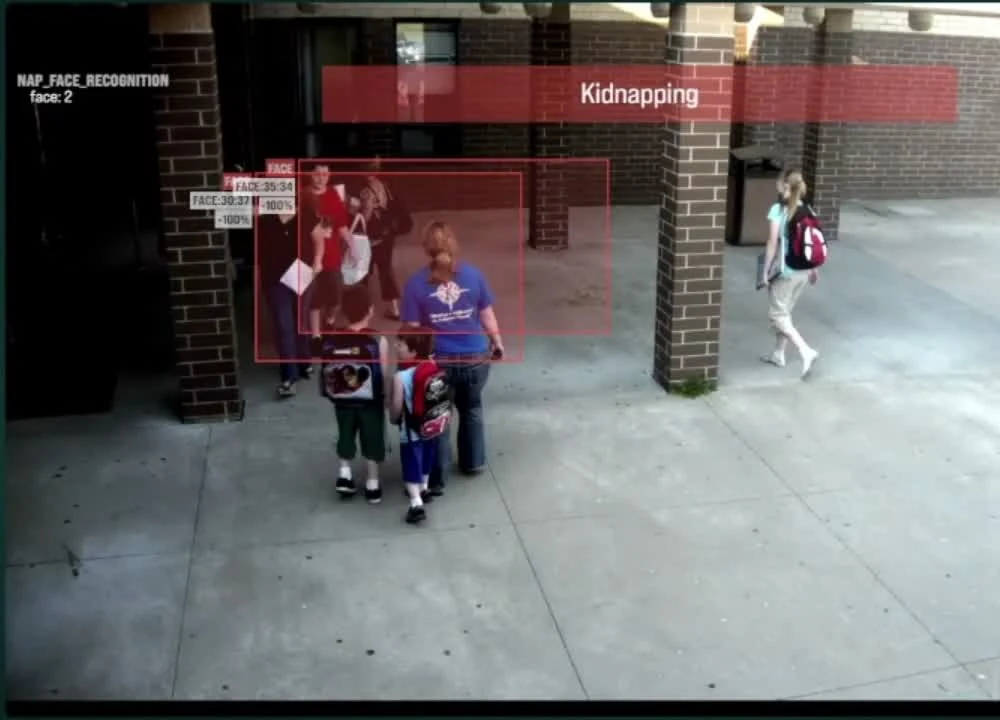
Flag a possible child-abduction incident and give security staff visual context to assess the situation and coordinate a response.
Give operators incident context
NAP connects detections to site rules and an operator response. Kidnapping, fire and smoke, perimeter and weapon detection scenarios bring the relevant camera view and location to the team responsible for the event.
Operators can assess the situation in context and follow the response policy for that site. The workflow reduces the need to search across feeds before deciding what to do next.
- 01Identify a relevant event
- 02Apply the site response policy
- 03Route evidence to the operator
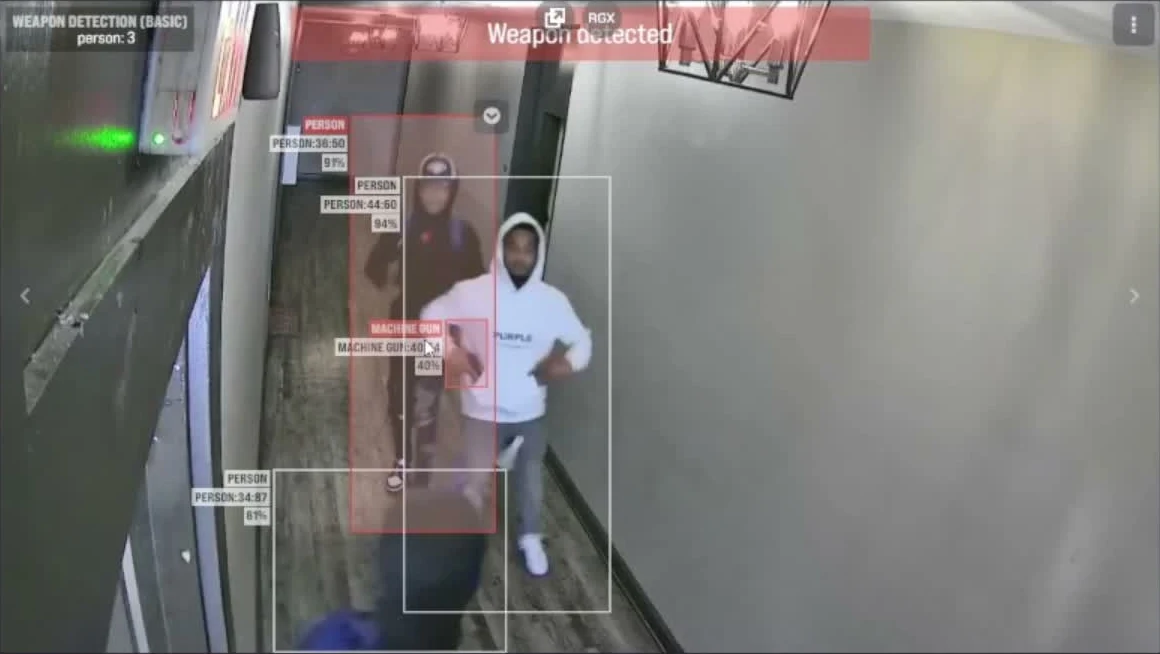
Detect visible weapons, alert security with location and video evidence, and trigger the configured door-locking response to restrict the suspect’s movement.
A coordinated school response
Each school has its own response policy. If an armed suspect is detected inside, connected IP door locks can restrict movement to a designated area. Detection before entry can trigger a school lockdown to prevent access. Door actions follow the site’s emergency plan and preserve emergency egress.
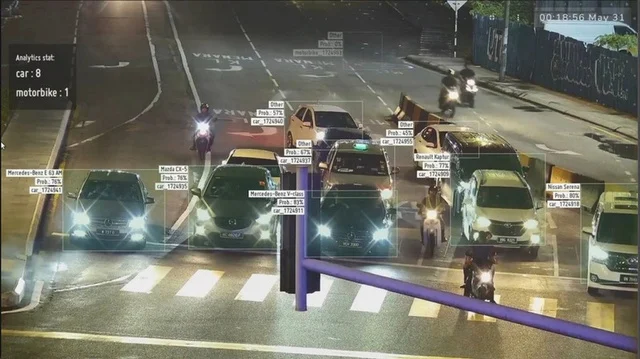
The same platform supports vehicle and parking scenarios, extending visibility beyond school buildings without creating a separate monitoring process for every use case.
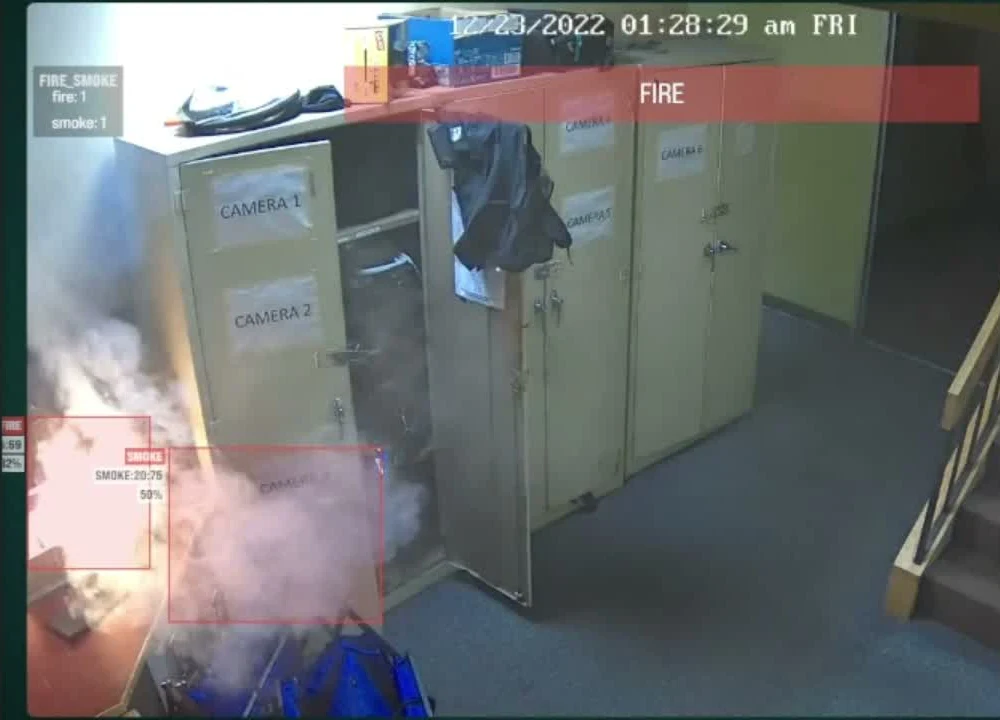
Identify fire and smoke in the video stream and notify the responsible team for review and response.
Less noise. Faster coordination.
AI event filtering reduces irrelevant monitoring alerts. Linking an incident to its location and footage reduces the time spent assembling the information needed to respond.
For the security team, the value is direct: less time assembling context, faster coordination and a shared view of the incident across distributed sites.