

Airport Baggage / COMPLETED PROJECT
Baggage protection from check-in to reclaim.
Connected baggage identification, handling events and video evidence across five journey stages. Damage, opening and rough-handling alerts help security and baggage teams locate incidents and investigate what happened.

baggage identification accuracy
Match each bag to its identifier and video across five monitored handling stages.
damage or opening incidents detected
Flag damage or opening and link the incident to the bag and footage for security review.
- Before
- Reconstructing baggage incidents across separate handling stages
- After
- Baggage identity, handling events and footage in one incident record
What we implemented
Baggage identification
Connected camera observations with baggage identifiers and tracking data across 200+ cameras.
Five handling stages
Covered check-in, sorting, aircraft loading, unloading and baggage reclaim.
Handling incident detection
Configured damage, opening, drops and rough-handling detection with incident alerts.
Traceable incident records
Linked the bag, location, handling event and footage for security and baggage-team investigations.
Fragmented baggage evidence
A damaged or opened suitcase creates a problem for the passenger, the airline and airport security. The team needs to establish where the incident happened, what occurred and which footage explains it. Watching individual camera feeds does not provide that complete journey.
The monitored journey covers check-in, sorting, aircraft loading, unloading and reclaim.
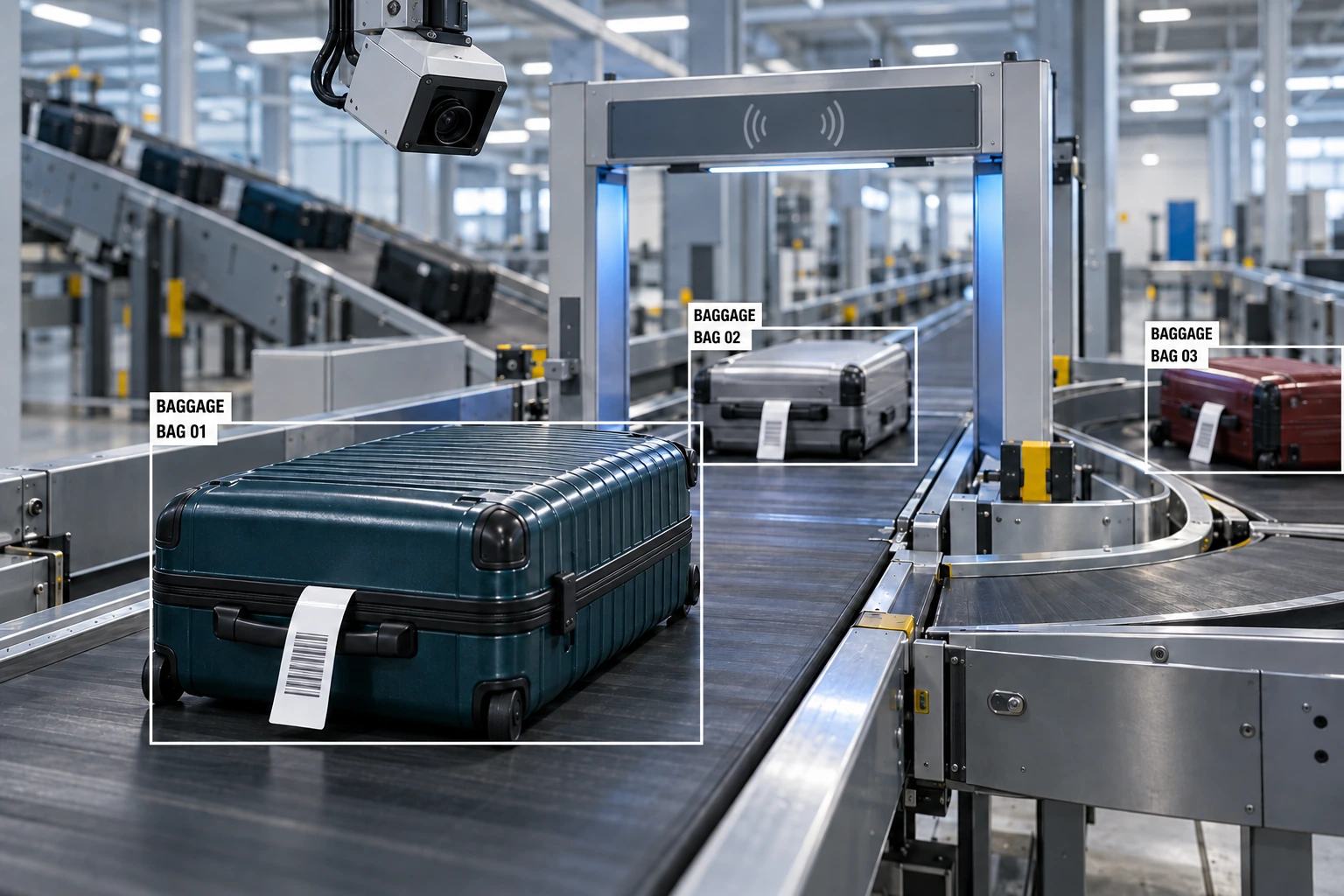
Camera observations and baggage identifiers connect the handling stages.
Scenario illustrationTrace the baggage journey
NAP connects camera observations with baggage identifiers and tracking data. The solution design combines baggage tags and QR/RFID/NFC inputs with the baggage handling system, so security teams can follow a bag through the monitored stages instead of searching unrelated feeds.
The workflow brings video evidence and event records together. Operators can review the incident, its location and the bag’s movement history in context.
- 01Identify the bag and its location
- 02Detect damage, tampering or mishandling
- 03Notify security with linked video evidence
Detect handling incidents
Analytics identify signs of damage, opening, drops and rough handling. A configured rule turns the detected condition into an incident record and a notification for security.
The evidence record supports investigation and coordination with baggage operations and airline teams. Zone-level analytics show dwell time and damage patterns, helping teams identify where handling processes need attention.
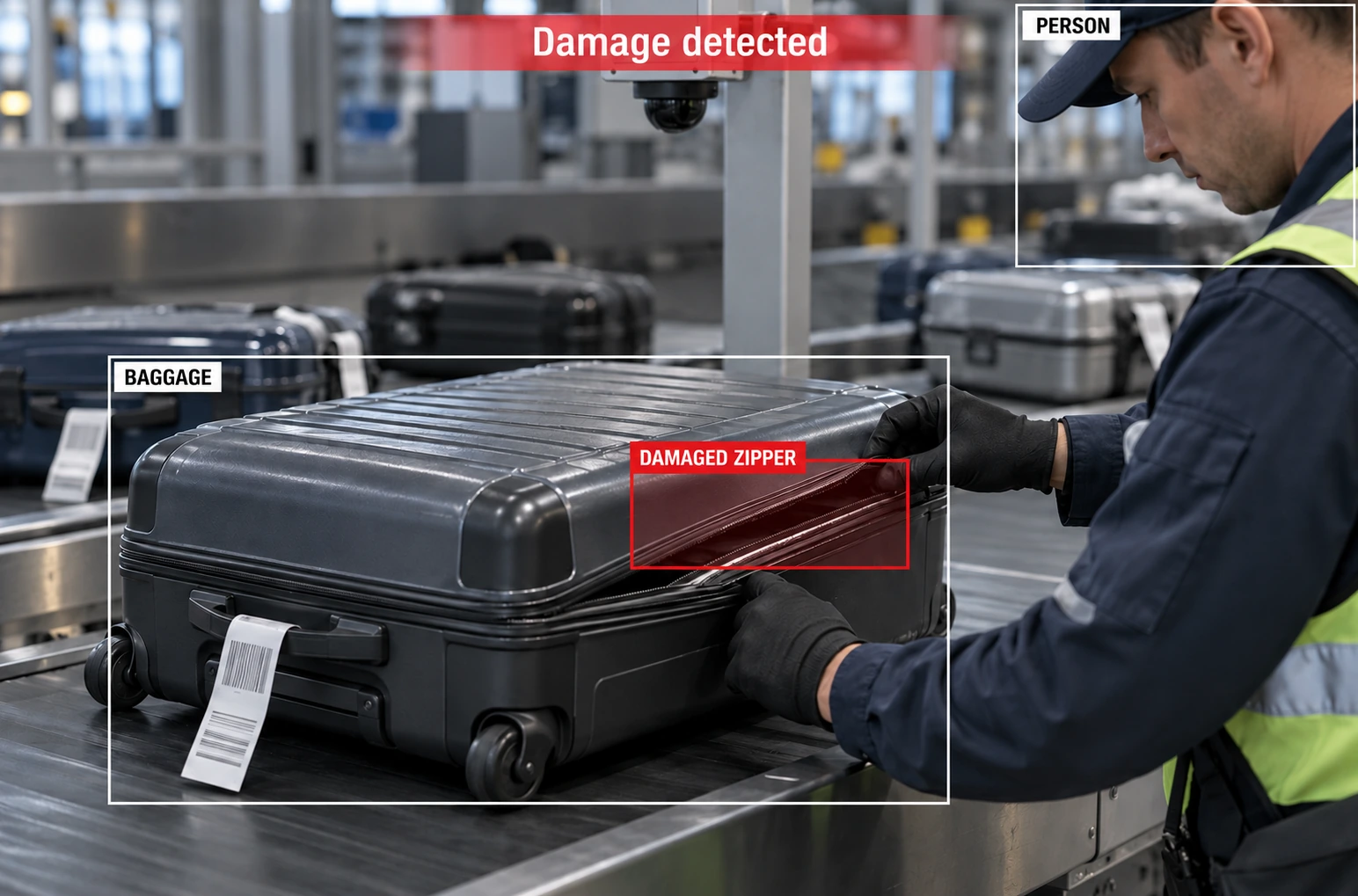
A handling incident becomes a reviewable event for airport security.
Scenario illustrationFaster processing. Fewer complaints.
Identification and incident detection connect the right bag to the handling incident and its footage. Processing each event in under 2 seconds gives security and baggage teams timely information for review. More than 40% fewer baggage complaints after one year connects the operational results to passenger experience.
Together, these results support a clear operating model: trace the bag, detect the incident and preserve the evidence for a timely response. The same platform also supports airport security scenarios beyond the baggage journey.
Event processing time
Process each baggage event in under 2 seconds so teams can review handling incidents promptly.
Fewer baggage complaints
Baggage complaints fell by more than 40% one year after implementation.